The Basics: Overview
Most skin cancers are caused by contact with ultraviolet (UV) rays from the sun and other sources of UV radiation, like tanning beds.
Limiting your contact with UV radiation lowers your risk of skin cancer. To protect your skin from damage caused by UV radiation:
- Stay out of the sun as much as possible between 10 a.m. and 4 p.m., when the sun’s rays are strongest
- Cover up with long sleeves, long pants or a long skirt, a hat, and sunglasses
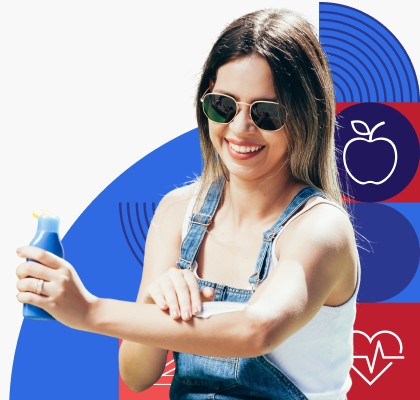
- Put on broad spectrum sunscreen with SPF 15 or higher
- Don’t use indoor tanning machines
A change on your skin — like a new growth or mole, a sore that won’t heal, or a change in an old mole — is the most common sign of skin cancer. If you notice a change in your skin, talk to your doctor.
Read more about how to protect yourself from skin cancer.
Why do I need to protect my skin?
Protecting your skin from the sun and other UV radiation today may help prevent skin cancer later in life. Most skin cancer appears later in life, but skin damage from the sun can start during childhood.
Taking steps to protect your skin may also help prevent:
- Wrinkles
- Blotches or spots on your skin
- Other damage to your skin and eyes